

The relationship between the Netherlands and Japan is older than most bilateral histories between Western and Asian countries. For two centuries during Japan’s sakoku period, Dejima — the small artificial island in Nagasaki harbour — was the only point of contact between Japan and the Western world, and the Dutch were the only Western traders permitted to maintain it. That history is not decorative; it is the reason the Dutch Chamber of Commerce in Japan is one of the most active, the reason King’s Day gatherings in Tokyo draw a crowd that understands the occasion, and the reason a Dutch beer in Japan carries an association that goes well beyond the green bottle. Heineken was founded in Amsterdam in 1864, decades after Dejima’s most active era, but it arrived in a country that already knew the Netherlands by name.
Amsterdam’s pale lager, brewed in 70+ countries
Heineken N.V. was founded in 1864 in Amsterdam by Gerard Adriaan Heineken, who purchased the De Hooiberg brewery in the city centre and began producing the pale lager that would become the most internationally distributed beer brand in the world. The brewery is now headquartered in Amsterdam and produces Heineken in over seventy countries, making it one of the few beers whose production footprint is genuinely global.
The beer is a pale lager. The pour is pale gold and the sensory profile is built around the brewery’s proprietary A-yeast strain — a yeast that produces the distinctive character that Heineken drinkers recognise across markets regardless of where the specific batch was produced. The malt body is light, the hop finish mild, and the overall profile is clean and consistent: a lager designed for reliability across cultures and climates rather than regional distinctiveness. At 5.0% ABV, it is a standard-strength beer in a 350ml can format — enough for a single serving, practical for any occasion.
How Heineken Beer is drunk at home
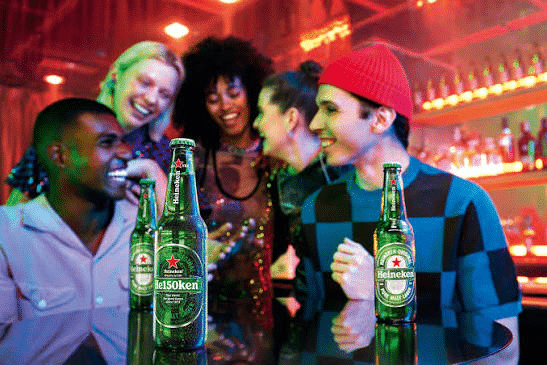
Proost! (PROAST) — the Dutch toast, close in sound and spirit to the German Prost, raised at the borrel and at every occasion that follows. The borrel is the Dutch institution most associated with Heineken: the after-work drink-and-snack hour, informal and sociable, built around a cold beer and a table of bitterballen — the deep-fried meat ragout balls that are the Dutch bar snack above all others. The crisp outer shell and the molten, savory interior of the bitterballen alongside a cold Heineken is a combination that Dutch people living abroad tend to miss with unusual specificity.
Stroopwafels — the caramel-syrup waffle cookies that have become one of the Netherlands’ most recognised exports — appear alongside coffee or jenever rather than beer, but they are part of the same Dutch table culture that the borrel belongs to. Haring, the raw herring eaten with chopped onion by tilting the head back, is the other Dutch food experience most connected to the national drinking culture — clean, briny, and paired with a cold lager in a way that suits the directness of both the food and the beer.
King’s Day on April 27 — the national holiday that turns Dutch cities orange and fills the canals with boats — is the outdoor occasion where Heineken is most consistently present in the Netherlands, a beer that works at the scale of a national party as easily as it works at a two-person borrel.
How to drink it in Japan
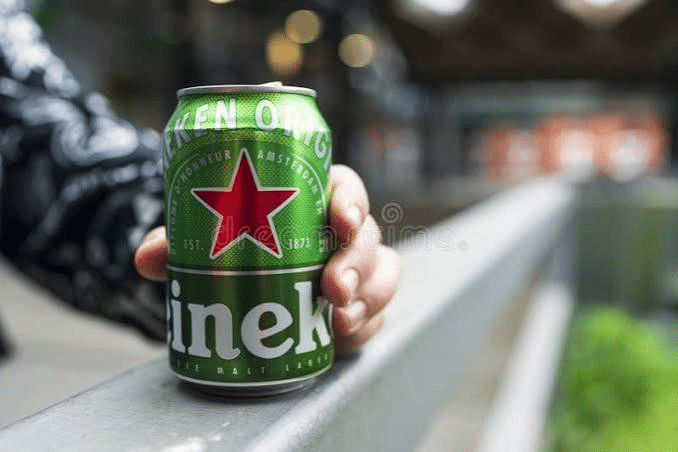
Heineken is available in Japan through standard retail channels, which means the Omori Mart case format is most relevant for Dutch households that want to stock the fridge reliably rather than purchase individual cans at convenience store prices. The borrel logic translates directly to Tokyo: a cold Heineken at the end of the working day, with something salty to eat alongside it, requires no cultural adaptation.
At 7-Eleven, try it alongside a bag of kaki no tane — the rice cracker and peanut mix that provides the same salt-and-crunch function as bitterballen without the frying. It is not a direct substitute, but it fills the same role at a Tokyo borrel: something to reach for between sips without requiring a kitchen. For a composed pairing at home, serve it with karaage — the fried chicken whose crisp exterior and juicy interior follow the same logic as bitterballen, a fried savory snack alongside a cold, clean lager with a mild hop finish. The pairing works because both elements are straightforward and neither is trying to be anything else.
King’s Day gatherings in Tokyo, where the Dutch community in Japan gathers every April 27, are the occasion most suited to a case of Heineken: outdoor, social, requiring a beer that works at volume and across a crowd that includes people from outside the Netherlands who have been invited into the celebration.
Get Heineken Beer delivered in Japan
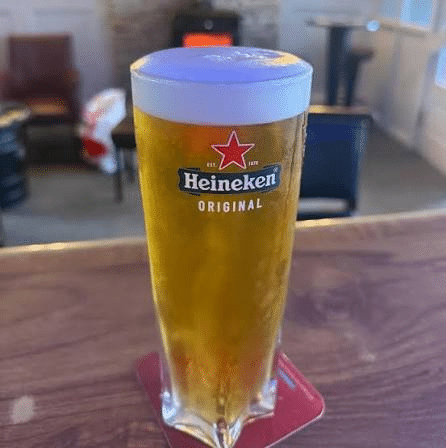
Heineken Beer is available from Omori Mart in a 350ml × 24 can case, delivered nationwide across Japan.
- Free shipping on orders over ¥15,000
- Pay at FamilyMart, 7-Eleven, or Lawson — or by bank transfer or card
- Nationwide delivery to any address in Japan
Rakuten and Amazon Japan do not carry this label in case format at the same terms. Omori Mart is where Dutch residents in Japan stock the fridge properly — by the case, with konbini payment available.
[Shop Heineken Beer →]
https://omorimart.com/product/heineken-beer-can-350ml-x-24-cans/
Proost in Amsterdam, where Gerard Heineken started brewing in 1864 in a city that Japan already knew by name, and kanpai at a Tokyo borrel on a Wednesday evening — cold, pale gold, and exactly what the occasion called for.

 No products in the cart.