

Spain drinks more non-alcoholic beer per capita than almost any other country in Europe. This trend reflects the country’s social drinking culture.
The tapeo often takes place across several stops in one evening. As a result, people need good drink options even when they cannot or do not want to drink alcohol. That may include drivers, pregnant people, workers preparing for the next morning, or anyone choosing not to drink.
Estrella Galicia’s non-alcoholic version contains 0.04% ABV, which makes it effectively alcohol-free. Hijos de Rivera describes it as Spain’s leading 0.0% alcohol beer. The brewing process aims to preserve the clean malt character and balanced hop note of standard Estrella Galicia.
For Spaniards living in Tokyo, it offers a simple way to stay part of the tapeo when alcohol is not an option. You can still raise a glass, enjoy the food, and stay at the table with everyone else.
Galicia’s Non-Alcoholic Lager from 1906
Hijos de Rivera began in 1906 in A Coruña, Galicia. The brewery sits in Spain’s Atlantic-facing northwest. Unlike many Spanish breweries, the company has remained family-owned through the decades.
Today, Hijos de Rivera produces Estrella Galicia and its non-alcoholic expression. The brewery brings the same focus on lager character to a category that has become increasingly popular in Spain.
What Estrella Galicia Non-Alcoholic Tastes Like
Estrella Galicia Non-Alcoholic is a lager with 0.04% ABV. It pours pale gold and delivers clean malt character with a balanced hop note.
The brewing process presents the main challenge. Brewers must reduce the alcohol while keeping the flavor and structure of the original beer.
Estrella Galicia approaches this challenge by maintaining the characteristics that make the standard lager recognizable. The result gives drinkers malt character, hop balance, and a refreshing lager profile without the alcohol level of the regular version.
The 250ml format also suits the tapeo. You can enjoy a small bottle at each stop without committing to a larger serving.
How to Drink Estrella Galicia Non-Alcoholic Beer at Home

¡Salud! (sah-LOOD) is the classic Spanish toast. Everyone at the table can use it, regardless of what sits inside the glass.
Some regions extend the toast to ¡Salud, amor y pesetas!. However, the simple ¡Salud! remains the familiar choice.
Non-alcoholic beer now has a regular place in Spanish tapas culture. Bars often serve it alongside standard cañas. Therefore, choosing a non-alcoholic beer does not mean leaving the social ritual behind.
The tapeo works particularly well with this format. A small cold beer can arrive alongside jamón ibérico, olives, or other tapas at each stop.
Food Pairings for the Spanish Table
The same foods that pair with standard Estrella Galicia also work well with the non-alcoholic version. Its clean malt character and balanced hop note complement many small Spanish dishes.
Jamón ibérico offers an easy starting point. The salt and richness of the cured ham work well with the beer’s refreshing profile.
Olives, cheese, and other tapas also make natural pairings. Their salty and savory flavors complement the beer without overpowering it.
Paella provides another classic option. Families often serve the dish during long Sunday meals, which makes it a particularly good occasion for a non-alcoholic beer.
Everyone at the table can enjoy the same beer brand, even when some guests choose to avoid alcohol. That shared experience helps non-alcoholic beer fit naturally into Spanish social occasions.
Non-Alcoholic Beer at Spanish Festivals
Regional fiestas create another natural setting for non-alcoholic beer. Spain’s calendar includes National Day on October 12 and many regional festivals throughout the year.
These outdoor celebrations often revolve around food, conversation, and drinks. A 0.04% ABV beer gives non-drinkers another option besides water and soft drinks.
It also provides the sensory experience of beer. You get a cold, lightly bitter, structured drink without the alcohol content of a standard lager.
How to Drink It in Japan

The Estrella Galicia Non-Alcoholic Beer is a year-round option in Japan, suited to any occasion where the participation of the full table matters more than the alcohol content of the individual glass. Japan’s own non-alcoholic beer category is well-developed, but a Spanish non-alcoholic lager from a Galician brewery with a 1906 founding history is a different proposition from the domestic options — it brings the cultural context of the Spanish tapas bar alongside the practical function.
At FamilyMart, try it alongside a salted edamame or a mild rice cracker — the clean malt character and the balanced hop note work alongside simple, slightly salty snacks in exactly the way that a standard Estrella Galicia does, with no adjustment required for the absence of alcohol. For a composed pairing at home, serve it with gambas ajillo — the garlic shrimp in olive oil that is the most direct Spanish tapas pairing available in a Tokyo kitchen. The clean malt body and the hop bitterness of the non-alcoholic Estrella Galicia cut through the richness of the olive oil and the heat of the garlic in the same way the standard version does, and the 0.04% ABV means the pairing is available to every guest at the table regardless of whether they are drinking.
Spanish non-alcoholic lagers from Galician breweries are not available through Tokyo’s standard retail channels. By the case from Omori Mart — 250ml × 24 bottles — the per-bottle cost is accessible for an effectively zero-ABV beer that preserves the malt and hop character of one of Spain’s most recognised regional lagers.
Get Estrella Galicia Non-Alcoholic Beer delivered in Japan
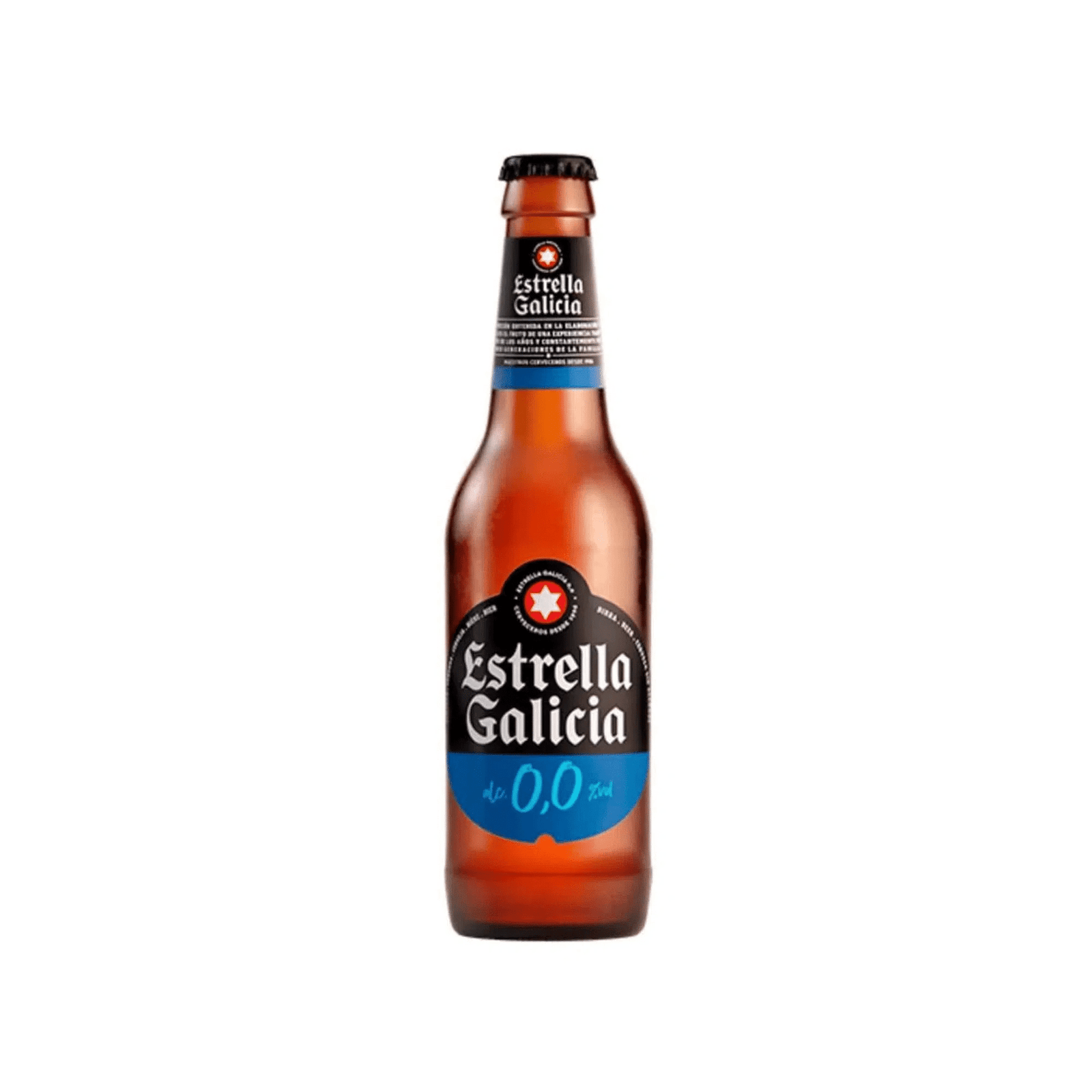
Estrella Galicia Non-Alcoholic Beer is available from Omori Mart in a 250ml × 24 bottle case, delivered nationwide across Japan.
- Free shipping on orders over ¥15,000
- Pay at FamilyMart, 7-Eleven, or Lawson — or by bank transfer or card
- Nationwide delivery to any address in Japan
Rakuten and Amazon Japan do not carry this label. Omori Mart is where Spaniards in Japan find the full Estrella Galicia range — including the one that ensures nobody at the table is left out of the ¡Salud!
[Shop Estrella Galicia Non-Alcoholic Beer →]
https://omorimart.com/product/estrella-galicia-non-alcoholic-beer-250ml-x-24-bottles/
¡Salud! in A Coruña, where Hijos de Rivera decided that the tapeo should include everyone, and kanpai at a Tokyo table where the toast is the same regardless of what is in the glass — pale gold, clean, and the right thing to be holding when the round comes around.



 No products in the cart.