

The word “original” gets used loosely in brewing. Weihenstephan uses it with more justification than most. The brewery on the hill above Freising has been producing beer since 1040 — before the Reinheitsgebot existed, before Munich was a city, before Germany was a country. The Original Beer is the flagship Helles: the everyday lager from the world’s oldest brewery, brewed the same careful way it has always been. If you are German and living in Japan, that continuity is either something you think about or something you simply taste. Either way, it is here.
The flagship Helles from the world’s oldest brewery
Bayerische Staatsbrauerei Weihenstephan — the Bavarian State Brewery Weihenstephan — was founded in 1040 in Freising, Bavaria. What began as a monastic brewery under Benedictine monks passed into Bavarian state ownership during the secularisation of the early nineteenth century and has operated as a state institution ever since. The brewery also houses the brewing faculty of the Technical University of Munich, making Freising one of the most significant sites in the global history of brewing science.
The Original Beer is a Munich Helles — the pale lager style that emerged in the late nineteenth century as Bavaria’s answer to the rising popularity of lighter Czech lagers. The pour is pale gold, clear and bright. The malt is soft rather than forward, providing body without sweetness that outstays its welcome. Noble hop bitterness — from Hallertau hops grown in the region north of Munich — provides balance that keeps the finish clean and dry. At 5.1% ABV, it is a lager built for the long table: enough character to reward attention, light enough to sustain an afternoon without demanding it.
How Weihenstephan Original Beer is drunk at home
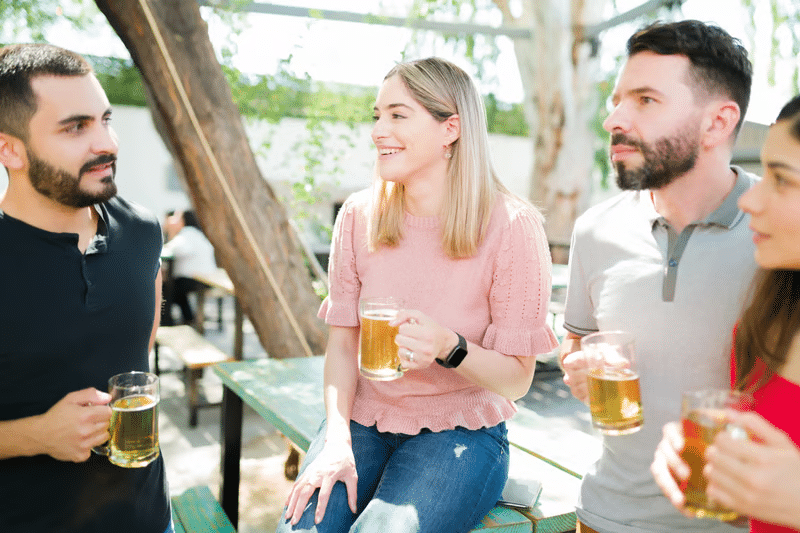
Prost! (PROAST) — direct, with full eye contact. The German toast is not decorative. Drop your gaze when the glasses connect and you have broken a ritual that most Germans take seriously. Never clink with water.
In Bavaria, the Helles is the Biergarten beer. It is what arrives at the outdoor table under the chestnut trees on a Sunday afternoon without anyone needing to specify it — the default, the baseline, the drink that defines the occasion rather than the other way around. Bratwurst with mustard is the natural companion: grilled simply, served without fuss, eaten alongside a Brezel still warm from the oven. The chewy, salt-dusted pretzel is not optional; it belongs at the table from the first round. For the meal that extends into the afternoon, Schweinshaxe — slow-roasted pork knuckle with skin gone dark and crackling — gives the clean, dry finish of the Helles something to cut through. The beer handles the richness of the dish better than its modest character might suggest.
Oktoberfest in late September through early October is the season most associated with Munich lager culture, and the Helles is present throughout — at festival tables and at the quieter Biergarten sessions that precede and follow the main event.
How to drink it in Japan

The Weihenstephan Original is a year-round beer in Japan, but it earns its place most clearly in spring and early autumn — April through June and September through October — when the temperature in Tokyo and Yokohama sits in the range that a clean, balanced lager was designed for.
At Lawson, try it alongside a plain salted rice cracker — the salt and the clean malt character of the beer reach the same simple, satisfying conclusion that a Brezel does, without requiring any further explanation. For a more considered pairing at home, serve it with yakitori tare — the soy-glazed grilled chicken skewer. The light caramel of the tare glaze and the soft malt sweetness of the Original find each other easily, and the hop bitterness in the finish clears the palate between skewers. It is a pairing that works because both elements are restrained enough to let the other show.
At a German restaurant in Tokyo, a Helles on tap can run ¥1,100 or more for a 330ml pour. By the case from Omori Mart, the per-bottle cost is considerably lower — and Weihenstephan, specifically, is not the kind of import that appears reliably on Tokyo tap lists.
Get Weihenstephan Original Beer delivered in Japan
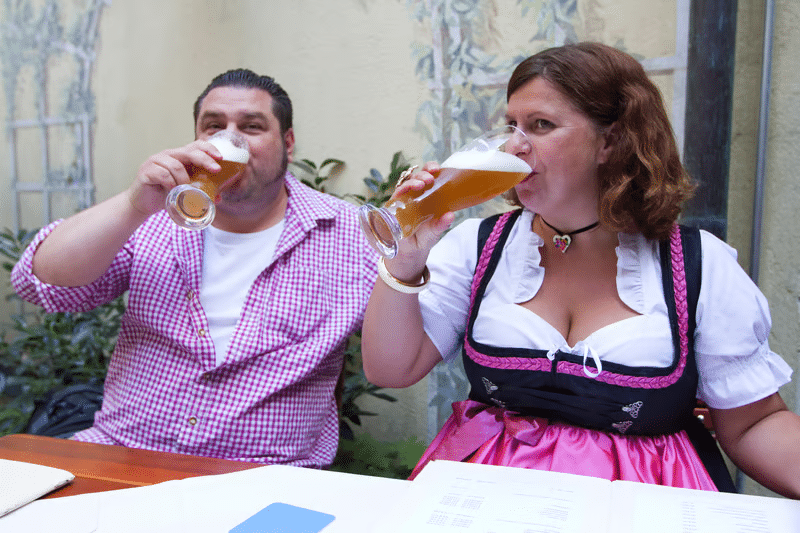
Weihenstephan Original Beer is available from Omori Mart in a 330ml × 24 bottle case, delivered nationwide across Japan.
- Free shipping on orders over ¥15,000
- Pay at FamilyMart, 7-Eleven, or Lawson — or by bank transfer or card
- Nationwide delivery to any address in Japan
Rakuten and Amazon Japan do not carry this label. Omori Mart is where Germans in Japan find the beers that belong on a serious shelf.
[Shop Weihenstephan Original Beer →]
https://omorimart.com/product/weihenstephan-original-beer-330ml-x-24-bottles/
Prost on the hill at Freising where the first batch was brewed nearly a thousand years ago, and kanpai at a Tokyo table in October — some things do not need to change to remain worth drinking.



 No products in the cart.