

The German pilsner is a different beer from its Czech cousin, and most Germans will tell you so without being asked. Where the Bohemian original is soft and rounded, the German version is drier, crisper, and more direct about its hops. Weihenstephan’s take on the style carries that tradition from the oldest brewery in the world — a pilsner brewed by an institution that was already centuries old when the style itself was invented. If you are German and living in Tokyo or Kobe and you want a pilsner that tastes like the one you know from home, this is the version worth finding.
Freising’s pilsner, brewed since 1040
Bayerische Staatsbrauerei Weihenstephan — the Bavarian State Brewery Weihenstephan — was founded in 1040 in Freising, Bavaria, making it the world’s oldest continuously operating brewery. The pilsner style arrived in the nineteenth century, long after Weihenstephan had already established itself across every other Bavarian beer tradition. The brewery’s Pilsner is its expression of that style — applying the same ingredient discipline and brewing precision that defines the Weihenstephan range to a format built around hop character rather than malt.
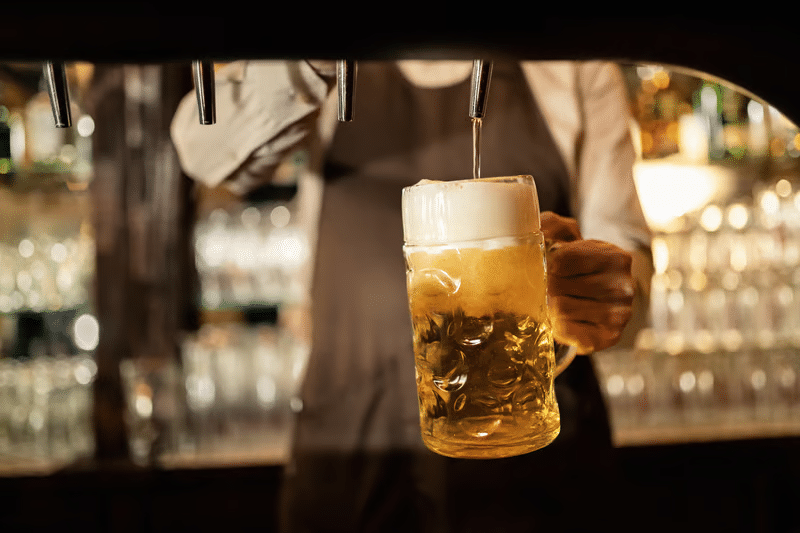
The beer pours pale gold with a clean, white head. The malt base is light, providing structure without sweetness, allowing the noble hop bitterness to carry the flavour. The finish is dry and herbal — Hallertau hops, grown in the region directly north of Munich, give German pilsners their particular character: assertive without aggression, bitter without sharpness. At 5.1% ABV, it sits at the standard range for the style, and it drinks with the kind of clarity that comes from brewing science applied over a very long time. The Weihenstephan brewing faculty, attached to the Technical University of Munich on the same Freising hill, has refined these techniques across generations of brewers.
How Weihenstephan Pilsner Beer is drunk at home
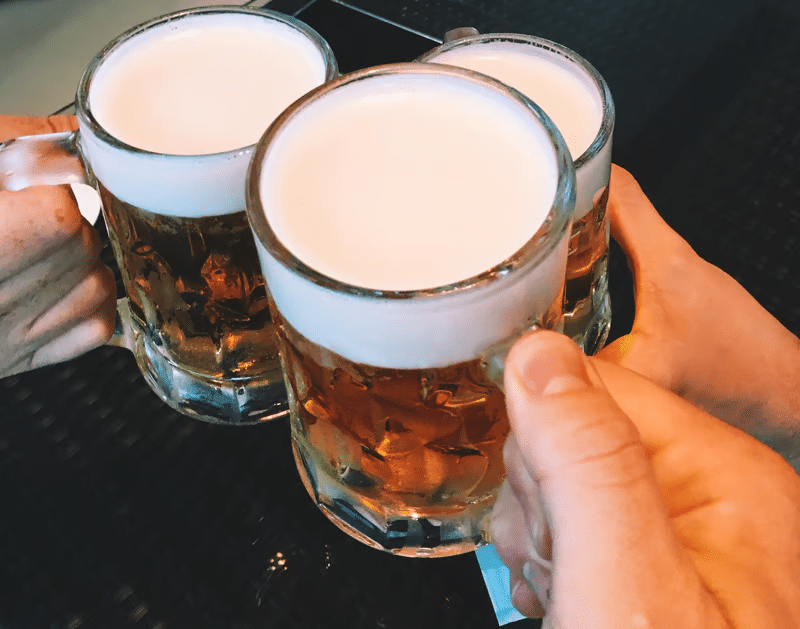
Prost! (PROAST) — raised with eye contact held until every glass has connected. In Germany, the toast is a ritual with genuine expectations: look away when you clink and it is considered bad luck. Never clink with water.
The German pilsner belongs to the table as much as any Bavarian lager, and Weihenstephan’s version sits comfortably alongside the foods that define a German outdoor meal. Bratwurst with mustard is the pairing that requires no deliberation — the fat and char of the sausage against the dry, hopped finish of the pilsner is a combination that has been working for a long time. Brezel arrives alongside: chewy, salted, the kind of snack that makes a beer with bitterness taste cleaner between bites. For the centrepiece, Schweinshaxe — slow-roasted pork knuckle with crackling skin — gives the pilsner’s drier profile a rich, substantial counterpart. The hop bitterness cuts through the fat in a way that a softer lager cannot quite manage.
Biergarten afternoons are where a pilsner of this character earns its keep — outdoor tables, long hours, food arriving without hurry. Oktoberfest in late September through early October brings the same extended-table spirit to a larger setting.
How to drink it in Japan

The Weihenstephan Pilsner is a warm-season beer in Japan, most at home from late April through September when the heat makes something cold and genuinely bitter feel necessary. The dry, herbal finish also makes it one of the more food-friendly imports available through Omori Mart — it handles a wider range of Japanese dishes than many European lagers.
At 7-Eleven, try it alongside kara-age kun — the chain’s fried chicken bites, available at the hot counter. The oil and the seasoning respond directly to the hop bitterness of the pilsner, each sharpening the other. For a considered pairing at home, serve it with sashimi: the clean, dry finish and the restrained malt base do not compete with the delicate flavour of raw fish, and the bitterness acts as a palate reset between pieces. It is a pairing that works because the beer stays out of the way while still being present.
At a German restaurant in Tokyo, a pilsner on tap can run ¥1,100 or more for a 330ml pour — and Weihenstephan specifically is not a label that appears on many Japanese tap lists. By the case from Omori Mart, the per-bottle cost is substantially lower and the supply is not dependent on a restaurant’s seasonal rotation.
Get Weihenstephan Pilsner Beer delivered in Japan
Weihenstephan Pilsner Beer is available from Omori Mart in a 330ml × 24 bottle case, delivered nationwide across Japan.
- Free shipping on orders over ¥15,000
- Pay at FamilyMart, 7-Eleven, or Lawson — or by bank transfer or card
- Nationwide delivery to any address in Japan
Rakuten and Amazon Japan do not carry this label. Omori Mart is where Germans in Japan find the imports that belong on a serious shelf.
[Shop Weihenstephan Pilsner Beer →]
https://omorimart.com/product/weihenstephan-pilsner-beer-330ml-x-24-bottles/
Prost on the Freising hillside where the first batch was brewed nearly a thousand years before the pilsner style existed, and kanpai at a Tokyo table in July — the brewery outlasted every trend and still makes a beer worth the wait.



 No products in the cart.