

Peizegem is barely a village — a scatter of brick houses and a church spire in Flemish Brabant, less than an hour from Brussels. If you grew up anywhere in Belgium where Sunday lunch stretched across four hours and four different beers, you know the particular sting of standing in front of a Tokyo convenience store fridge, holding something forgettable. You remember the label with the horned mark instead — half joke, half tradition — sitting on a café table next to a plate of fries. The gold in the glass, the way the yeast spice arrived before the hops did. That was home. It still is, one bottle at a time.
Belgium’s golden devil, since 1919
Satan Gold Beer comes from Brouwerij De Block, founded in 1919 (De Block brewery) in Peizegem, Flemish Brabant, a farming region where small independent breweries have supplied local cafés for generations. It belongs to Belgium’s devil-beer tradition, the same lineage that produced Duvel and Delirium — beers named with a wink, strong enough to earn the name honestly. At 8.0% ABV, Satan Gold Beer is a Belgian strong golden ale: pale gold in the glass, with spicy yeast character up front, citrus and herbal hop notes underneath, and a warming finish that lingers. Belgian golden ales like this one were built for a specific kind of drinking — slow, sociable, and paired with food rather than downed on their own. The recipe leans on the same house yeast strains and open fermentation traditions that define Flemish Brabant brewing, where flavor comes from what happens in the tank, not from added spice. It is a beer built to be talked about at the table, which is exactly how Belgians have always treated it.
How Satan Gold Beer is drunk at home

In Belgium, you raise this glass to “Santé! / Op uw gezondheid!” (sahn-TAY / op-uw geh-ZONT-hayt) — French and Flemish both mean “to your health,” a reminder that Belgium runs on two languages and one shared beer culture. At home, Satan Gold Beer shows up at Sunday family lunch, where the table might move through several beers across several courses, each one matched to what’s being served. It sits comfortably next to moules-frites, the national dish of mussels and fries, and against the richness of stoofvlees (carbonnade flamande), beef stewed for hours in dark beer until it falls apart. It also holds its own against a plain paper cone of Belgian fries with mayonnaise — treated in Belgium less like a snack and more like a national religion. You’ll find bottles like this one at Trappist abbey pilgrimages and regional beer festivals too, where Belgian beer carries something closer to monastic weight than casual refreshment.
How to drink it in Japan
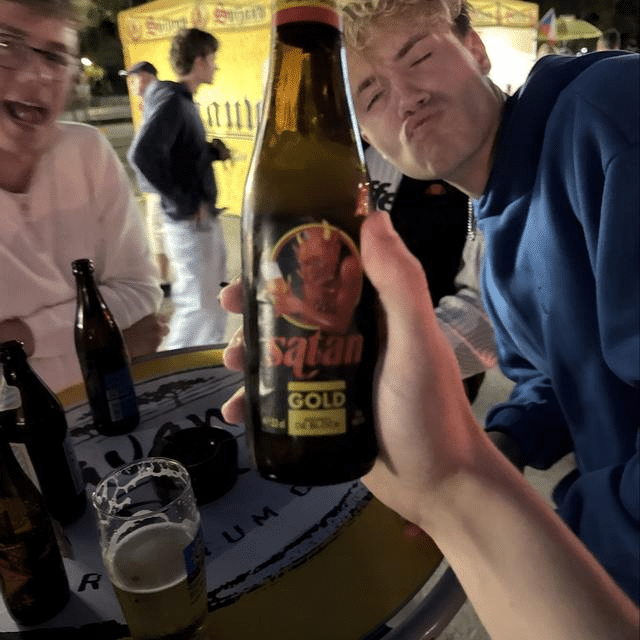
The bridge from Peizegem to Tokyo is shorter than it looks. Chill Satan Gold Beer lightly rather than ice-cold, so the spice and citrus stay forward. For a conbini pairing, FamilyMart’s Famichiki fried chicken has enough salt and crunch to stand up to the beer’s warmth without fighting it. For something more considered, try it alongside Japanese karaage at home — the citrus and herbal hop notes cut through the fried richness the same way they would with Belgian fries. It shines in the colder months, when an 8% warming finish feels less like a strong drink and more like the right one. At a Belgian restaurant in Tokyo, a single glass runs upward of ¥1,200. At Omori Mart, buying by the case brings the per-bottle cost down well below that.
Get Satan Gold Beer delivered in Japan
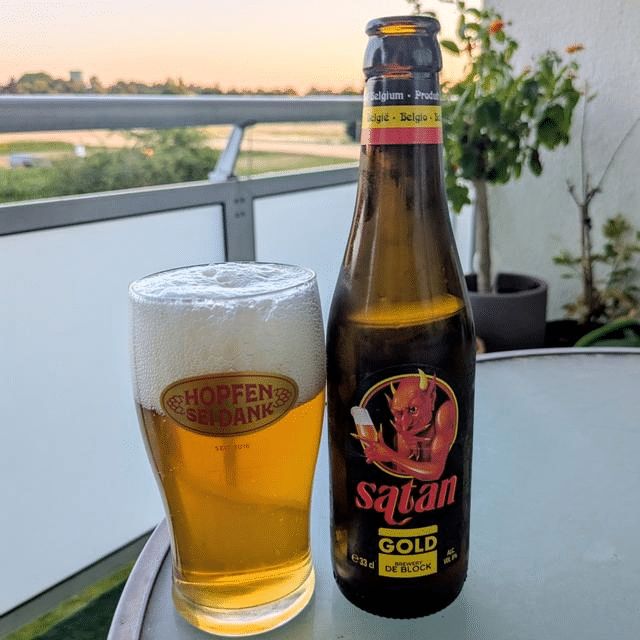
Satan Gold Beer (330ml x 24 bottles) is available now through Omori Mart, shipped nationwide across Japan.
- Free shipping on orders over ¥15,000
- Pay at the konbini — FamilyMart, 7-Eleven, or Lawson — plus bank transfer and card
- Delivery anywhere in Japan
Rakuten and Amazon Japan don’t stock Belgian devil-beer brands like this one. Omori Mart does.
[Shop Satan Gold Beer →]
https://omorimart.com/product/satan-gold-beer-330ml-x-24-bottles/
Santé! Op uw gezondheid! Two languages, one toast, one country behind it. Raise the glass, say Kanpai (乾杯) back, and let both words share the table — the way Belgium always meant them to.



 No products in the cart.