

The Abbaye Notre-Dame de Saint-Rémy sits in a valley in the Ardennes, in the French-speaking province of Namur, and the monks there have been connected to brewing since 1595. They are not a large operation. They do not produce a wide range. What they produce, they produce with the kind of attention that comes from centuries of practice in a single place, for reasons that have nothing to do with market share. The Rochefort 8° is the middle beer of their three-beer range — stronger than the 6°, lighter than the 10° — and it is widely regarded as one of the finest beers produced anywhere in the world. If you are Belgian and living in Tokyo, finding it here is not a small thing. It is the kind of beer that people plan evenings around.
Four centuries of Trappist brewing in Namur
Brasserie de Rochefort — the brewery of Abbaye Notre-Dame de Saint-Rémy — has its origins in 1595 in Rochefort, Namur, in the Ardennes region of southern Belgium, with modern brewing operations established in 1899. The abbey is one of Belgium’s authentic Trappist breweries: production is conducted under direct monastic supervision, the brewery operates within the abbey enclosure, and proceeds support the community and its charitable works. The Rochefort range is one of the most limited in output among the recognised Trappist breweries, which contributes to the beer’s reputation and to its relative scarcity outside Belgium.
The 8° is a Trappist Belgian strong dark ale at 9.2% ABV. The pour is deep brown, and the complexity is immediate: dark fruit — fig, raisin, plum — alongside molasses, the whole carried by a warming finish that the 9.2% ABV produces without aggression. The yeast character from Trappist fermentation is present throughout, giving the beer a depth that the fruit and malt alone would not generate. It is bottle-conditioned, with live yeast continuing to develop the beer’s character after packaging, and it ages well — a bottle set aside for a year or two tends to deepen in the fruit and molasses notes without losing its structure.
How Rochefort 8° Beer is drunk at home
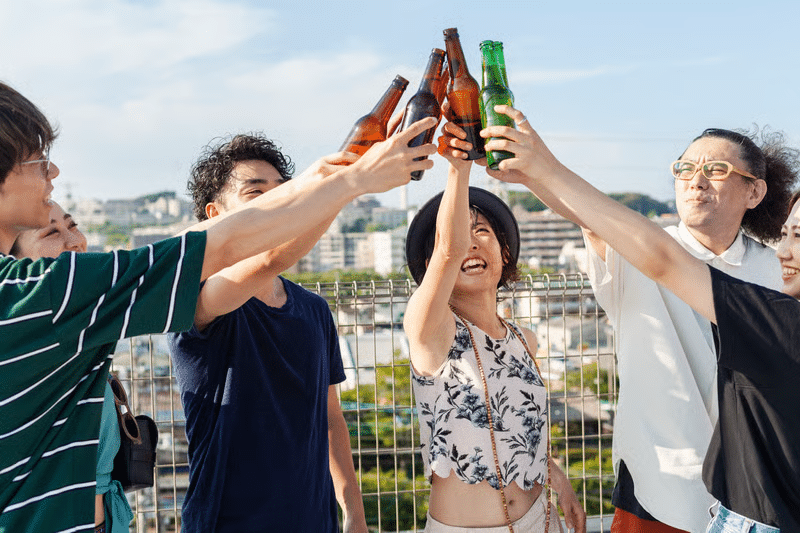
Santé! / Op uw gezondheid! (sahn-TAY / op-uw geh-ZONT-hayt) — French and Flemish respectively, both meaning “to your health.” In Namur, the French-speaking south of Belgium, Santé is the natural toast — and for a beer from an Ardennes abbey with this level of provenance, the toast tends to be said with deliberate attention.
In Belgium, the Rochefort 8° belongs to the most considered moment of the Sunday family lunch — the bottle opened when the table has settled, the main courses completed, and the afternoon has moved into the part that belongs to conversation rather than eating. Stoofvlees, the slow-braised beef stew reduced to a dense sweet-savory glaze, is the pairing the 8°’s dark fruit and molasses character handles with the most authority: fig and raisin alongside braised beef in reduced ale sauce is a combination that requires no justification. Moules-frites suits an earlier pour, but a glass of Rochefort 8° alongside the remains of the meal, with Belgian fries with mayonnaise still on the table, is a pairing that works because the beer has enough complexity to match whatever is left.
The tradition of Trappist abbey pilgrimage gives the Rochefort brewery particular significance — it is one of the least visited of Belgium’s Trappist abbeys by virtue of its Ardennes location, which means a journey there is a genuine undertaking rather than a day trip from Brussels.
How to drink it in Japan
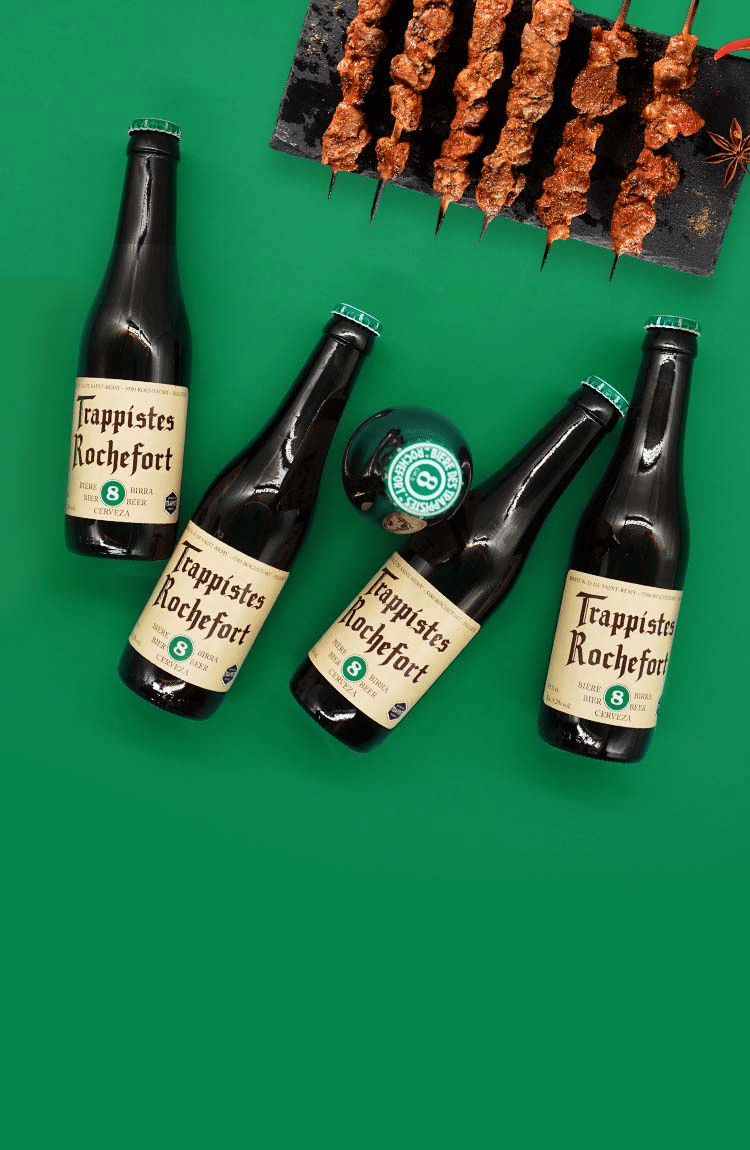
The Rochefort 8° is a winter beer in Japan — November through February — when the Ardennes character of the beer, the dark fruit and the warming finish, suits the cold and the slower pace of the season. It is also the beer to open at the gatherings that carry weight in the Belgian calendar in Tokyo: St. Nicholas Day on December 6, a year-end dinner where the table calls for something that marks the occasion properly.
At 7-Eleven, try it alongside a dark chocolate bar above 70% cacao — the bitterness of the chocolate and the fig and raisin in the beer occupy complementary registers, the molasses note in the Rochefort finding the cocoa depth of the chocolate without either element competing. For a considered pairing at home, serve it with wagyu beef sukiyaki — the sweet soy broth, the marbled beef, and the soft tofu find a direct counterpart in the dark fruit and molasses of the 8°, the beer’s warming finish carrying the richness of the dish through to the close. It is a pairing that connects two of the world’s most deliberate food and drink traditions through the logic of intensity meeting intensity.
At Tokyo’s specialist Belgian beer bars, a 330ml Rochefort 8° can run ¥1,500 or more per bottle. By the case from Omori Mart — 330ml × 24 bottles — the per-bottle cost is considerably lower, and the case supports a winter season of deliberate evenings rather than a single occasion.
Get Rochefort 8° Beer delivered in Japan
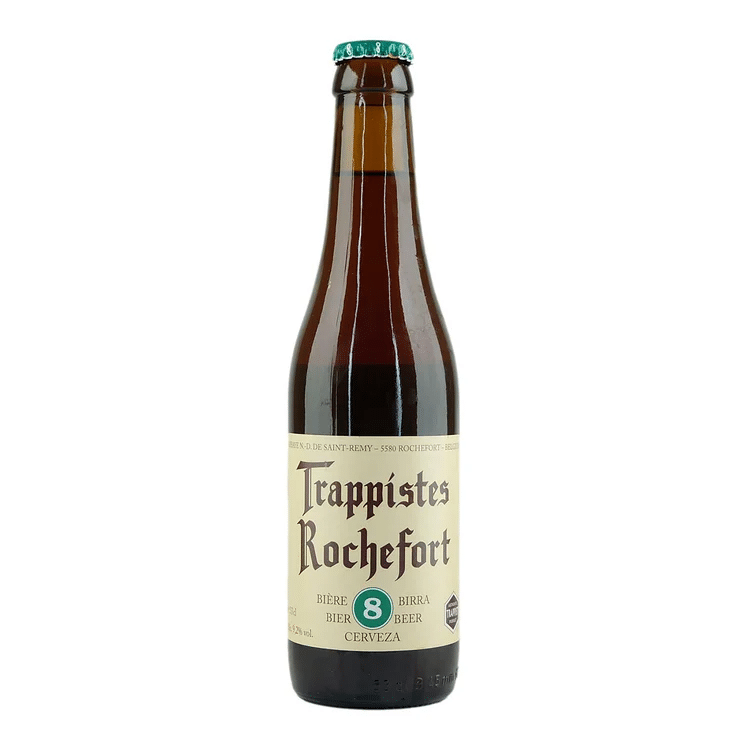
Rochefort 8° Beer is available from Omori Mart in a 330ml × 24 bottle case, delivered nationwide across Japan.
- Free shipping on orders over ¥15,000
- Pay at FamilyMart, 7-Eleven, or Lawson — or by bank transfer or card
- Nationwide delivery to any address in Japan
Rakuten and Amazon Japan do not carry this label. Omori Mart is where Belgians in Japan find the Trappist beers that belong at the serious end of the shelf — including the one from the Ardennes valley that most people never make it to in person.
[Shop Rochefort 8° Beer →]
https://omorimart.com/product/rochefort-8-beer-330ml-x-24-bottles/
Santé at Abbaye Notre-Dame de Saint-Rémy, where monks have brewed in the Ardennes since 1595, and kanpai at a Tokyo table in December — deep brown, fig and raisin and molasses, and the kind of beer that earns the silence after the first sip.



 No products in the cart.