

There is a particular kind of Sunday afternoon that belongs to Munich. Chestnut trees filtering the light, long wooden tables filling up slowly, a litre glass set down in front of you without ceremony. You did not need to order it — it was already understood. If you are German and living in Tokyo or Yokohama, you know exactly what that moment feels like. And you know how rarely anything here comes close to it.
Munich’s most enduring lager
Paulaner Brauerei was founded in 1634 by Minim friars in Munich, Bavaria, making it one of the oldest continuously operating breweries in Germany. The Münchner Hell — “hell” meaning pale or bright in Bavarian dialect — was first brewed in 1928 as an answer to the rising popularity of lighter lagers across Europe. It became the style against which all Munich Helles are measured.
The beer pours pale gold with a clean, white head. The malt is soft rather than sweet, built on Bavarian barley that gives the glass a quiet roundness without cloying weight. Hallertau hops — grown in the world’s largest continuous hop-growing region, located less than an hour north of Munich — provide a mild, herbal balance that keeps the finish dry and easy. There are no sharp edges here. Paulaner Münchner Hell is a lager designed for long conversations, not quick consumption.
It is brewed under the Reinheitsgebot, the Bavarian purity law of 1516 that restricts ingredients to water, barley malt, hops, and yeast. That constraint is not marketing — it is the reason the beer tastes the way it does.
How Paulaner Münchner Hell Beer is drunk at home
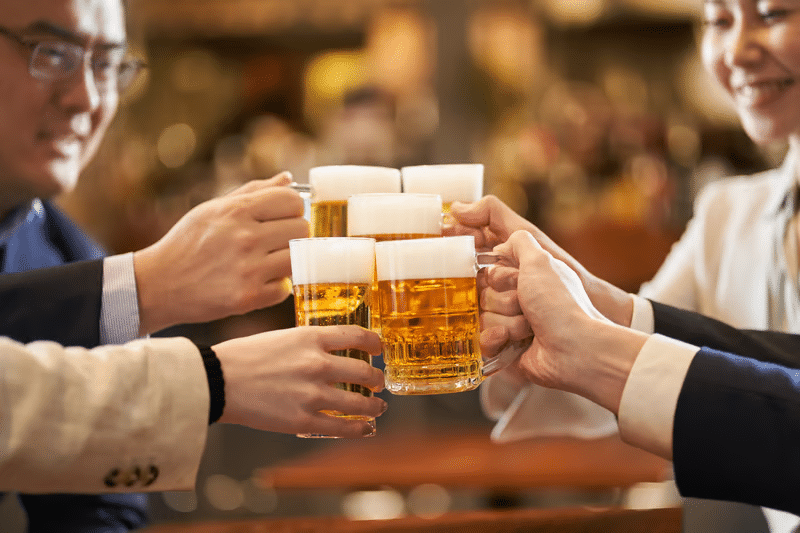
Prost! (PROAST) — said directly, with eye contact and a steady hand. Germans take the toast seriously: look away when you clink, and it is considered bad luck for the next seven years. Never clink with water.
In Bavaria, this beer belongs outdoors. Biergarten culture is a Sunday institution — families gather under the chestnut trees that were traditionally planted over cellars to keep the beer cool, and the afternoon unfolds without a fixed endpoint. Bratwurst with mustard is the natural companion, grilled and served with no fuss. Pretzels — Brezel, chewy and salt-crusted — sit on the table from the start. For the main event, Schweinshaxe, slow-roasted pork knuckle with crackling skin, is the Bavarian centerpiece that makes a litre of Helles disappear faster than expected.
Oktoberfest, held in late September through early October on the Theresienwiese in Munich, is the occasion most associated with Paulaner worldwide. But the quieter tradition — a Biergarten afternoon that extends until the light goes — is where this beer is most itself.
How to drink it in Japan
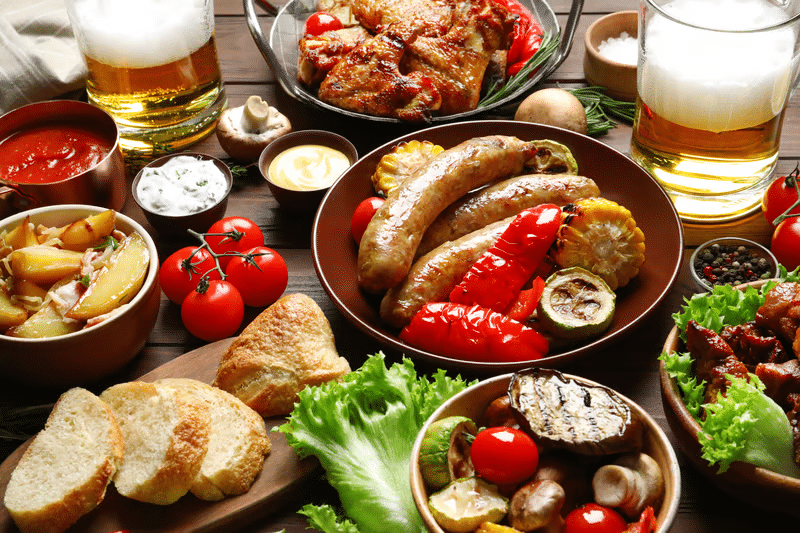
Japan has its own version of Oktoberfest each autumn, with events in Tokyo, Yokohama, and Osaka drawing crowds that take the occasion seriously. But you do not need to wait for the festival.
At a 7-Eleven, reach for a bag of kaki no tane — the small, rice-cracker-and-peanut mix that shares the same salt-and-crunch dynamic as a Brezel. It is not a pretzel, but it earns its place next to a cold Helles. For a more considered pairing, try the beer alongside tonkatsu — the Japanese breaded pork cutlet — which shares the same relationship with its lager that Schweinshaxe does back home. Rich, fried, and cut by carbonation.
Paulaner Münchner Hell drinks best in autumn in Japan, when the humidity drops and the temperature settles into the same range you would find in Munich at Oktoberfest. At a German restaurant in Tokyo, a half-litre on tap can run ¥1,200 or more. By the case from Omori Mart, you pay considerably less per bottle.
Get Paulaner Münchner Hell Beer delivered in Japan
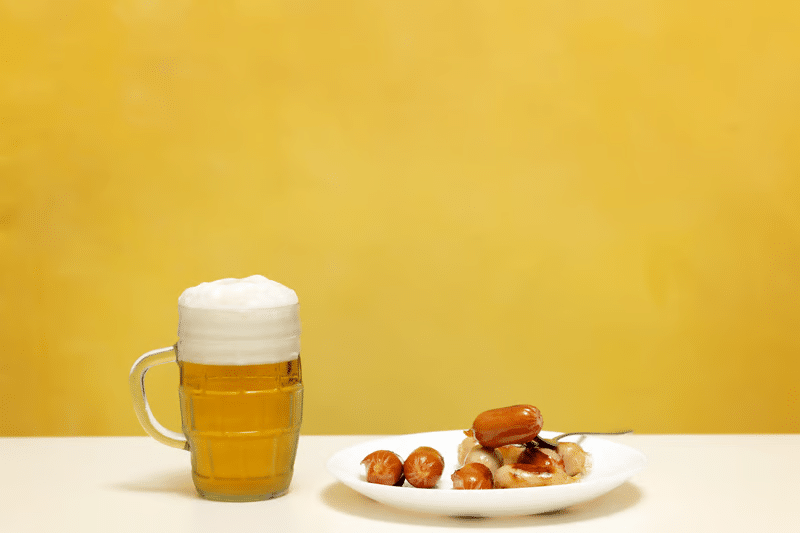
Paulaner Münchner Hell Beer is available from Omori Mart in a 330ml × 24 bottle case, delivered nationwide across Japan.
- Free shipping on orders over ¥15,000
- Pay at FamilyMart, 7-Eleven, or Lawson — or by bank transfer or card
- Nationwide delivery to any address in Japan
Rakuten and Amazon Japan do not carry this label. Omori Mart is where Germans in Japan stock the fridge properly.
[Shop Paulaner Münchner Hell Beer →]
https://omorimart.com/product/paulaner-munchner-hell-beer-330ml-x-24-bottles/
Prost in a Biergarten and kanpai at a Japanese table are separated by nine thousand kilometres and no distance at all. Both mean the same thing: look at the person across from you, and drink.



 No products in the cart.