

The stoneware swing-top bottle is the first thing most people notice about the St. Sebastiaan range. In a market full of glass bottles with paper labels, the ceramic swing-top communicates something before the beer is opened: that the contents are worth a different kind of container. Sterkens Brewery in Meer, in the Antwerp province, has been producing the St. Sebastiaan beers since the turn of the twentieth century, and the stoneware bottle has become as much a part of the brand’s identity as the abbey dubbel inside it. If you are Belgian and living in Tokyo, it is the bottle that looks most like a gift and drinks most like a winter evening — deep brown, rich caramel, dark fruit, and a soft mouthfeel that the 6.9% ABV supports without overstating.
Meer’s abbey dubbel in stoneware, since 1900
Sterkens Brewery was founded in 1900 in Meer, Antwerp province, in the north of Belgium near the Dutch border. The brewery produces the St. Sebastiaan range — named for the Christian martyr and patron saint — in the Belgian abbey style, a category that draws on the monastic brewing tradition without carrying Trappist designation. The Dark is the abbey dubbel expression: a style defined by its dark malt character, caramel sweetness, and the complex yeast profile of Belgian fermentation.
The beer pours deep brown with a persistent tan head, and the flavour profile follows the dubbel template with clarity: rich caramel from the dark malt, dark fruit — raisin, dried fig — from both the malt and the yeast, and a soft mouthfeel that makes the 6.9% ABV feel lighter than the flavour complexity suggests. The finish is warm and relatively clean, the malt sweetness resolving rather than lingering. The stoneware swing-top bottle is not decorative — it provides a genuine seal and maintains the beer’s condition effectively, which is part of why the format has persisted. In a 500ml swing-top, the St. Sebastiaan Dark is both a beer and a vessel worth keeping after the beer is gone.
How St. Sebastiaan Dark Beer is drunk at home

Santé! / Op uw gezondheid! (sahn-TAY / op-uw geh-ZONT-hayt) — French and Flemish respectively, both meaning “to your health.” In Antwerp province, the Flemish toast is the natural call — and a swing-top stoneware bottle opened at a Belgian table tends to generate its own quiet ceremony around the uncapping.
In Belgium, a dubbel at 6.9% belongs to the main course of the Sunday family lunch — substantial enough to carry the meal, restrained enough not to demand all the attention. Stoofvlees is the pairing the St. Sebastiaan Dark handles most naturally: the slow-braised beef stew, its sauce reduced to a caramelised, sweet-savory glaze, meets the rich caramel and dark fruit of the dubbel in a combination that the abbey dubbel style was effectively designed for. The sweetness of the stew and the malt sweetness of the beer deepen each other rather than competing. Moules-frites works alongside it in a lighter register — the brine of the mussels and the salt of the fries providing the savoury counterpoint that cuts through the caramel malt. Belgian fries with mayonnaise remain constant across every course, and the soft mouthfeel of the Dark makes them easy company.
Belgian beer festivals and the tradition of abbey pilgrimage give the St. Sebastiaan range a context that its non-Trappist status does not diminish — abbey-style beers occupy a respected position in Belgian brewing culture alongside their Trappist counterparts, and the stoneware bottle gives the St. Sebastiaan a presence on any festival table that glass bottles cannot match.
How to drink it in Japan
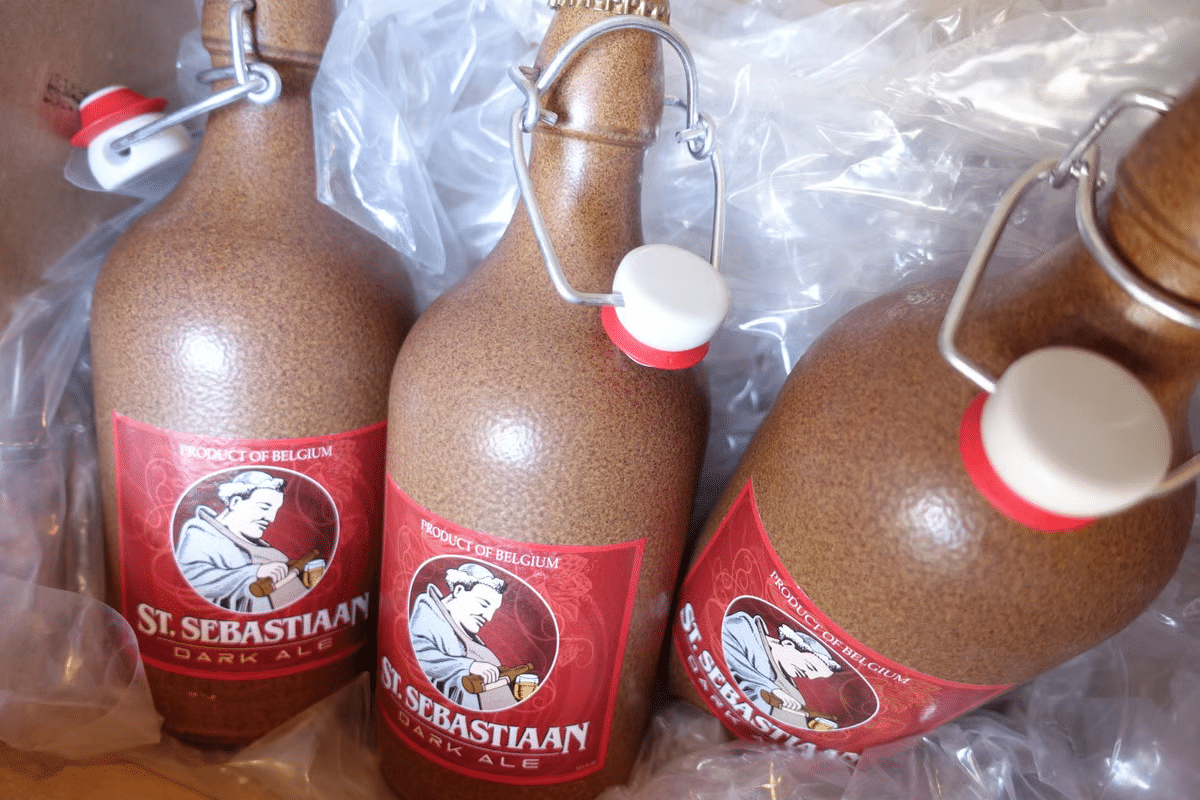
The St. Sebastiaan Dark is an autumn and winter beer in Japan — October through February — when a dark abbey dubbel with caramel and rich fruit suits the season and the food. The 500ml stoneware bottle also makes it one of the most visually distinctive imports available through Omori Mart, which means it doubles as a conversation piece at any gathering that includes Japanese guests unfamiliar with Belgian abbey beers.
At FamilyMart, try it alongside a cheese nikuman — the steamed bun with cheese filling, available warm at the counter — where the mild dairy and the slightly sweet bun respond to the caramel malt of the Dark in the same way that a soft cheese course follows a dubbel at a Belgian table. For a considered pairing at home, serve it with yakibuta ramen — the slow-braised chashu pork belly in a rich broth provides the same logic as Stoofvlees, a slow-cooked, slightly sweet braised meat dish meeting a beer with caramel depth and dark fruit. The stoneware bottle, poured into a wide goblet, completes the occasion.
Belgian abbey dubbels in 500ml stoneware bottles are not a format that Tokyo’s import shops stock reliably. By the case from Omori Mart — 500ml × 24 bottles — the per-bottle cost is accessible, and twenty-four swing-top bottles provide enough for a winter season of deliberate evenings and a set of reusable bottles afterward.
Get St. Sebastiaan Dark Beer delivered in Japan
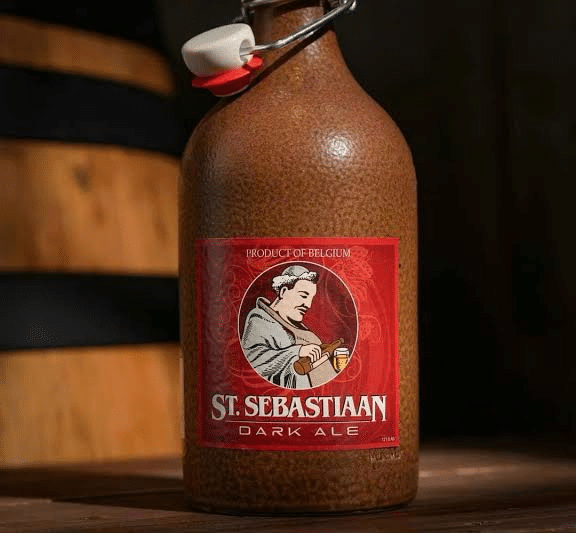
St. Sebastiaan Dark Beer is available from Omori Mart in a 500ml × 24 bottle case, delivered nationwide across Japan.
- Free shipping on orders over ¥15,000
- Pay at FamilyMart, 7-Eleven, or Lawson — or by bank transfer or card
- Nationwide delivery to any address in Japan
Rakuten and Amazon Japan do not carry this label. Omori Mart is where Belgians in Japan find the abbey beers that arrive in the right bottle for the occasion.
[Shop St. Sebastiaan Dark Beer →]
https://omorimart.com/product/st-sebastiaan-dark-beer-500ml-x-24-bottles/
Santé in Meer, where Sterkens Brewery has been filling stoneware bottles since 1900, and kanpai at a Tokyo table in November — deep brown, caramel and dark fruit, and the swing-top closure that makes the opening part of the occasion.


 No products in the cart.