

Bruges is a city that takes its beer seriously in the way that only a place with two centuries of uninterrupted practice can. The canals, the cobblestones, the Saturday market — these are the backdrop, but the thing that stays with Belgians who grew up there is the beer: specifically, the Flemish red-brown style that does not exist anywhere else in quite the same form. Sweet and sour in a proportion that took generations to calibrate, fruit and oak from the blending process, a depth that a standard ale cannot reach. If you are Belgian and living in Tokyo, finding that particular balance in a bottle in Japan is not something you expect. It is worth knowing that it is here.
Bruges’s sweet-sour ale, blended since 1825
Brouwerij Bourgogne des Flandres was founded in 1825 in Bruges, West Flanders, making it one of the older surviving breweries in a country where brewing history runs deep. The name — Burgundy of Flanders — reflects the wine-like character of the Flemish red-brown style, a beer that is aged, blended, and built on a complexity more associated with the cellar than the fermenting vessel.
The style is a Flemish red-brown blended ale. The base beer is blended with lambic — the spontaneously fermented Brussels-region ale — which introduces the sweet-sour balance and the fruit notes that define the finished product. The pour is deep reddish-brown, and the flavour carries stone fruit, a suggestion of oak from the ageing process, and an acidity that is present without being sharp. At 5.0% ABV, it is not a strong beer, but it is a complex one — the kind of beer that rewards attention across a full glass and changes character slightly as it warms. It is a style that Belgium produces and that the rest of the world has spent decades attempting to replicate without quite arriving at the same place.
How Bourgogne in Flandres Beer is drunk at home
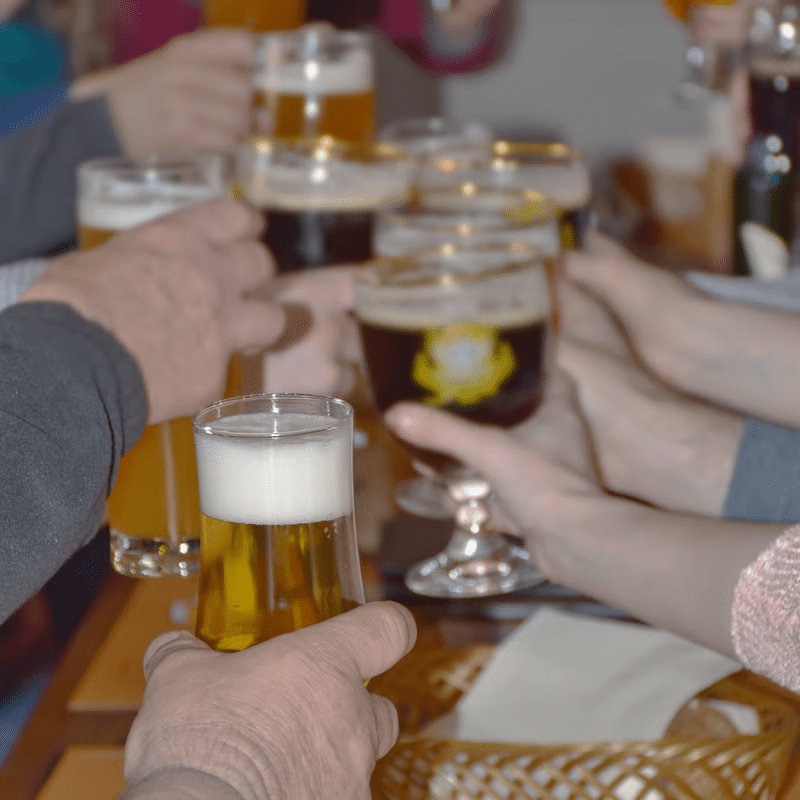
Santé! / Op uw gezondheid! (sahn-TAY / op-uw geh-ZONT-hayt) — French and Flemish for “to your health,” reflecting Belgium’s two dominant languages and the fact that which word you use depends on which side of the linguistic border you are standing on. Both are correct. Both are used.
In Belgium, beer is not a separate category from food — it is part of the same meal logic. A Sunday family lunch moves through multiple beers across courses, each chosen for what it accompanies. The Bourgogne des Flandres, with its sweet-sour fruit character, works naturally alongside moules-frites: the briny, steamed mussels and the crisp fries that constitute Belgium’s most recognisable dish. The acidity of the beer mirrors the cooking liquid of the mussels and cuts through the fat of the fries. Stoofvlees — Carbonnade Flamande, beef braised slowly in dark beer with onions until it collapses into a rich, slightly sweet stew — is the heavier pairing that the fruit and oak notes of the Bourgogne des Flandres handle with ease. Belgian fries with mayonnaise, eaten standing up or at the table, are the constant: the salt and the richness always finding their counterpart in a beer with this character.
Beer festivals and the tradition of visiting abbey breweries give the Belgian beer calendar its weight. The Flemish red style, with its roots in aged and blended production, carries that monastic seriousness even when drunk far from any abbey.
How to drink it in Japan

The Bourgogne des Flandres is a year-round beer in Japan, but it earns its place most clearly in the autumn and winter months — October through February — when the acidity and fruit character of the beer suit the richer, slower food of the colder season.
At 7-Eleven, try it alongside a beef and potato nikujaga onigiri — the sweet soy flavour of the filling finds a natural partner in the fruit and mild oak of the beer, the sweetness of each amplifying the other without tipping into excess. For a considered pairing at home, serve it with kakuni — Japanese braised pork belly cooked long with soy, mirin, and sugar. The caramelised glaze and the collapsing fat of the kakuni respond to the sweet-sour balance of the Bourgogne des Flandres in exactly the way Stoofvlees does: a rich, slow-cooked dish and a beer with acidity and fruit finding a working equilibrium. It is a pairing that crosses the cultural distance without losing anything.
Belgian beer imports in Tokyo specialty shops can run ¥900 or more per bottle for a Flemish red style. By the case from Omori Mart, the per-bottle cost is substantially lower, and the 330ml × 12 format makes a mixed tasting occasion straightforward to arrange.
Get Bourgogne in Flandres Beer delivered in Japan
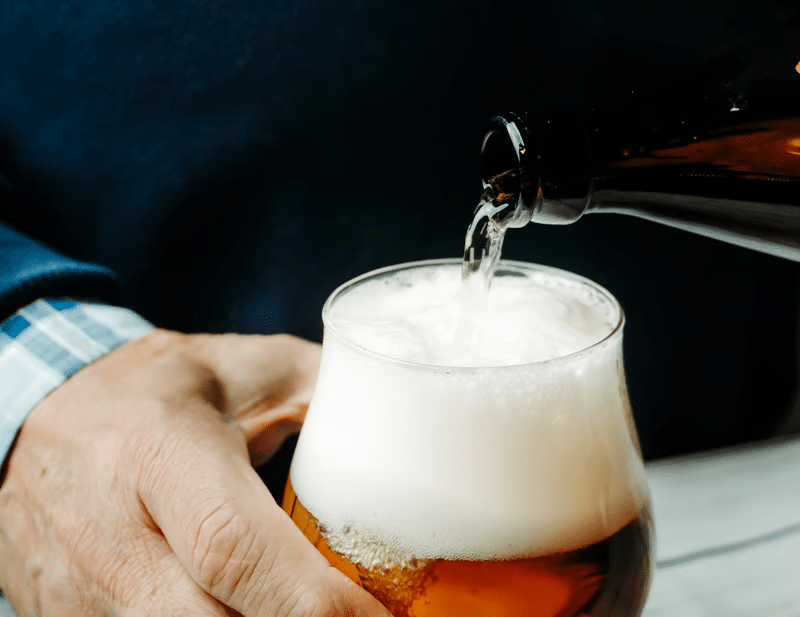
Bourgogne in Flandres Beer is available from Omori Mart in a 330ml × 12 bottle case, delivered nationwide across Japan.
- Free shipping on orders over ¥15,000
- Pay at FamilyMart, 7-Eleven, or Lawson — or by bank transfer or card
- Nationwide delivery to any address in Japan
Rakuten and Amazon Japan do not carry this label. Omori Mart is where Belgians in Japan find the beers that do not appear on standard import lists.
[Shop Bourgogne in Flandres Beer →]
https://omorimart.com/product/bourgogne-in-flandres-beer-330ml-x-12-bottles/
Santé on a Bruges canal in October and kanpai at a Tokyo table in November — the sweet-sour balance that took two centuries to settle does not change with the longitude.



 No products in the cart.