

Pierre Celis revived the Hoegaarden witbier tradition in 1965 with a recipe built on coriander and dried orange peel — the spice combination that defines the style and that had disappeared from the town when its last brewery closed in 1957. The standard Hoegaarden White is what most people know: cloudy, light, refreshing at around 5% ABV. The Grand Cru takes the same defining spice character and scales it into a strong pale ale at 8.5% — more malt, more warmth, the coriander and orange peel more pronounced rather than dialled back. If you are Belgian and living in Tokyo, the Grand Cru is the Hoegaarden that rewards the decision to sit down with something considered rather than simply cold.
Hoegaarden’s elevated witbier expression, revived 1965
Hoegaarden Brewery was revived in 1965 by Pierre Celis in Hoegaarden, Flemish Brabant, restoring a local wheat beer tradition that had lapsed for nearly a decade. Celis’s original recipe — wheat, coriander, dried orange peel, yeast — became the template for the modern Belgian witbier style and influenced wheat beer production worldwide. The Grand Cru is the brewery’s most elevated expression of that recipe, applying the same defining ingredients to a stronger base.
The style sits between a Belgian strong pale ale and a strong witbier — the coriander and orange peel of the original White are present and more pronounced at this strength, sitting over a malt sweetness that provides genuine body without heaviness. The pour is pale gold and the aroma carries the distinctive spice character of a witbier extended by the fuller malt profile. The warming finish from the 8.5% ABV arrives cleanly, integrated into the spice and malt rather than standing apart from them. At this strength, the beer benefits from being served slightly warmer than a standard lager — a few degrees above refrigerator temperature allows the coriander and orange peel to come fully forward in the glass.
How Hoegaarden Grand Cru Beer is drunk at home

Santé! / Op uw gezondheid! (sahn-TAY / op-uw geh-ZONT-hayt) — French and Flemish respectively, both meaning “to your health.” In Flemish Brabant, where Hoegaarden sits on the linguistic border between the two communities, both toasts are in regular circulation at the same table.
In Belgium, the Grand Cru belongs to the more considered part of the Sunday family lunch — a beer opened with intention rather than poured as the default round. Moules-frites suits it well: the coriander in the Grand Cru resonates with the spiced cooking liquid that mussels are often steamed in, and the orange peel note cuts through the salt of the fries with more character than a standard witbier brings. Belgian fries with mayonnaise are present regardless of course, and the spiced, malt-sweet character of the Grand Cru handles their fat comfortably. Stoofvlees, the slow-braised beef stew with its dense, caramelised sauce, is a heavier pairing that the Grand Cru’s 8.5% malt body can carry — the spice character of the beer providing a counterpoint to the stew’s sweetness rather than matching it.
Belgian beer festivals, where the Hoegaarden range sits alongside Trappist ales and strong goldens, give the Grand Cru a context that the standard White does not share — a beer that participates in the serious end of the occasion rather than arriving before it.
How to drink it in Japan
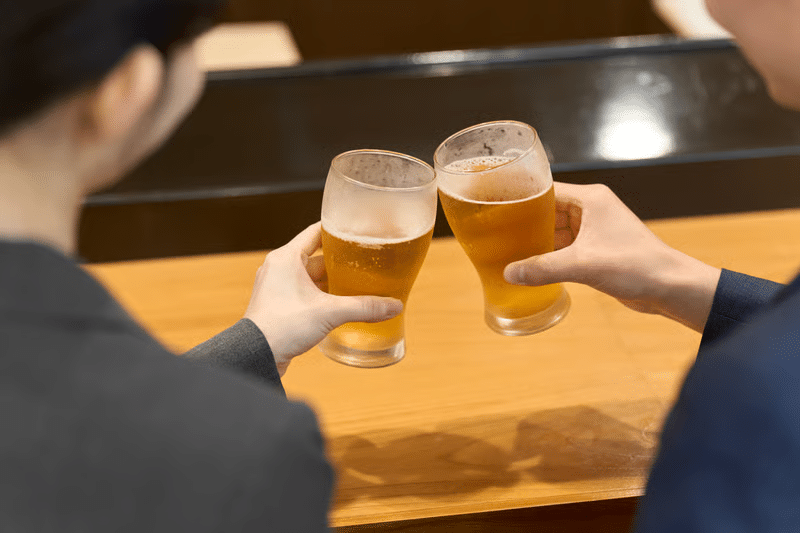
The Hoegaarden Grand Cru is a spring and autumn beer in Japan — April through June and September through November — when the temperature allows the coriander and orange peel character to come forward without the cold suppressing the aroma or the warmth making 8.5% feel like too much. It is also well-suited to the Belgian calendar in Tokyo: Belgian National Day on July 21 calls for something with the Hoegaarden name that goes beyond the White, and the Grand Cru fills that role directly.
At FamilyMart, try it alongside an orange-flavoured madeleine or a butter cake from the bakery counter — the citrus note of the orange peel in the beer and the buttery sweetness of the pastry find each other easily, the coriander spice giving the pairing an edge that a standard beer would not contribute. For a composed pairing at home, serve it with steamed clams in sake and butter: the briny sweetness of the clams, the richness of the butter, and the citrus-spice character of the Grand Cru form the same logic as moules-frites, adapted to what a Japanese kitchen has on hand. The coriander note in the beer performs the same function as the herb garnish over the clams — aromatic, present, lifting the dish.
Strong witbier expressions are not a category that Tokyo’s specialty import shops stock consistently, and the Grand Cru specifically is unlikely to appear outside dedicated Belgian beer bars. By the case from Omori Mart — 330ml × 24 bottles — the per-bottle cost is accessible for a beer at this strength and profile.
Get Hoegaarden Grand Cru Beer delivered in Japan
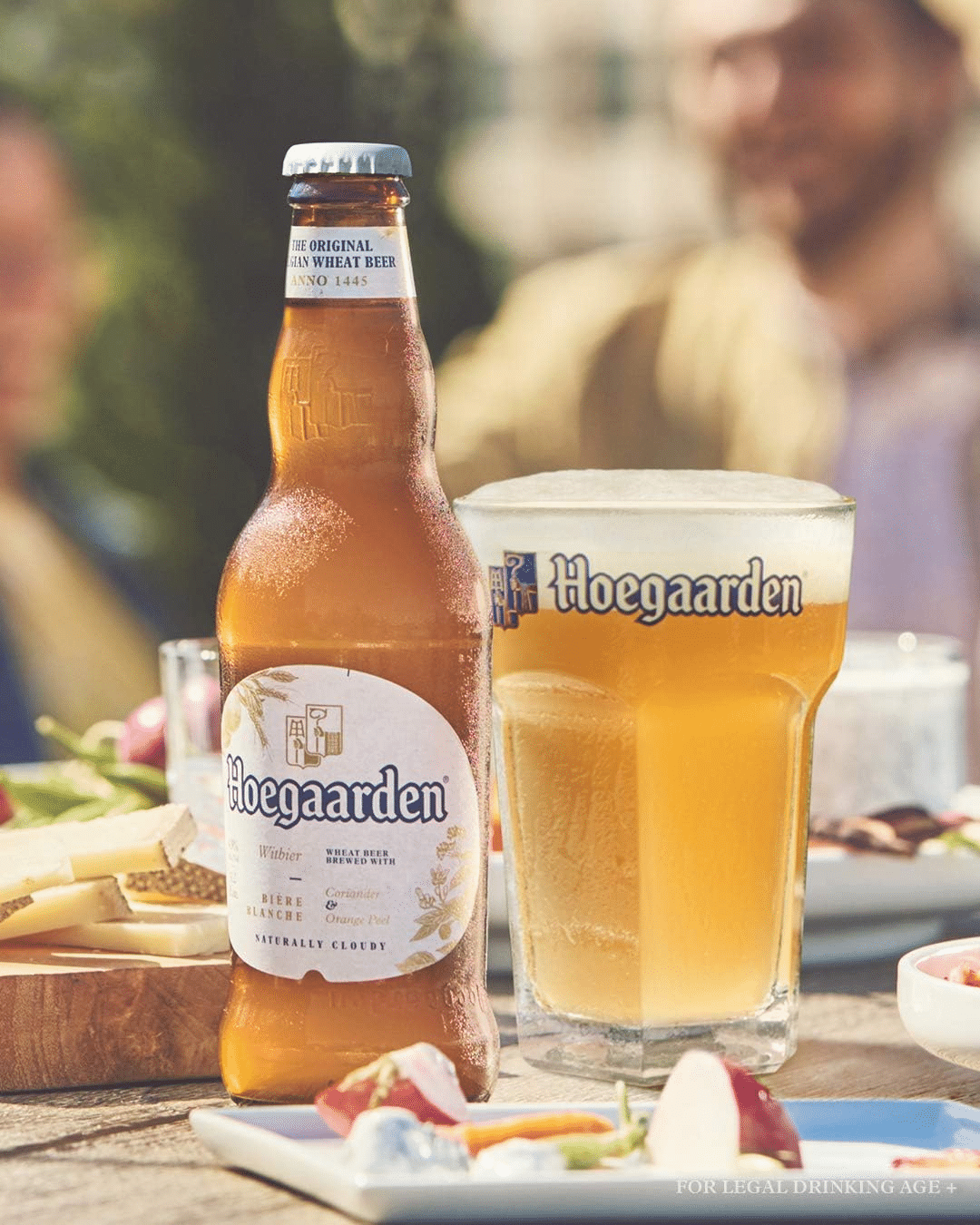
Hoegaarden Grand Cru Beer is available from Omori Mart in a 330ml × 24 bottle case, delivered nationwide across Japan.
- Free shipping on orders over ¥15,000
- Pay at FamilyMart, 7-Eleven, or Lawson — or by bank transfer or card
- Nationwide delivery to any address in Japan
Rakuten and Amazon Japan do not carry this label. Omori Mart is where Belgians in Japan find the Hoegaarden range in full — including the expression Pierre Celis’s original recipe was always capable of becoming.
[Shop Hoegaarden Grand Cru Beer →]
https://omorimart.com/product/hoegaarden-grand-cru-beer-330ml-x-24-bottles/
Santé in Hoegaarden, where Pierre Celis brought the coriander and orange peel back to the town in 1965, and kanpai at a Tokyo table in October — the same spice, more of everything, and worth the extra degree of attention.



 No products in the cart.